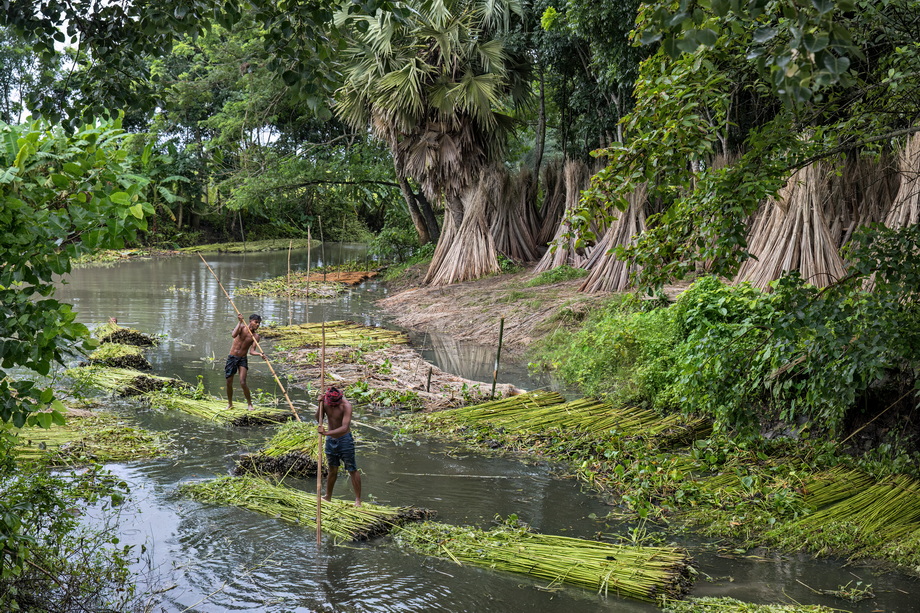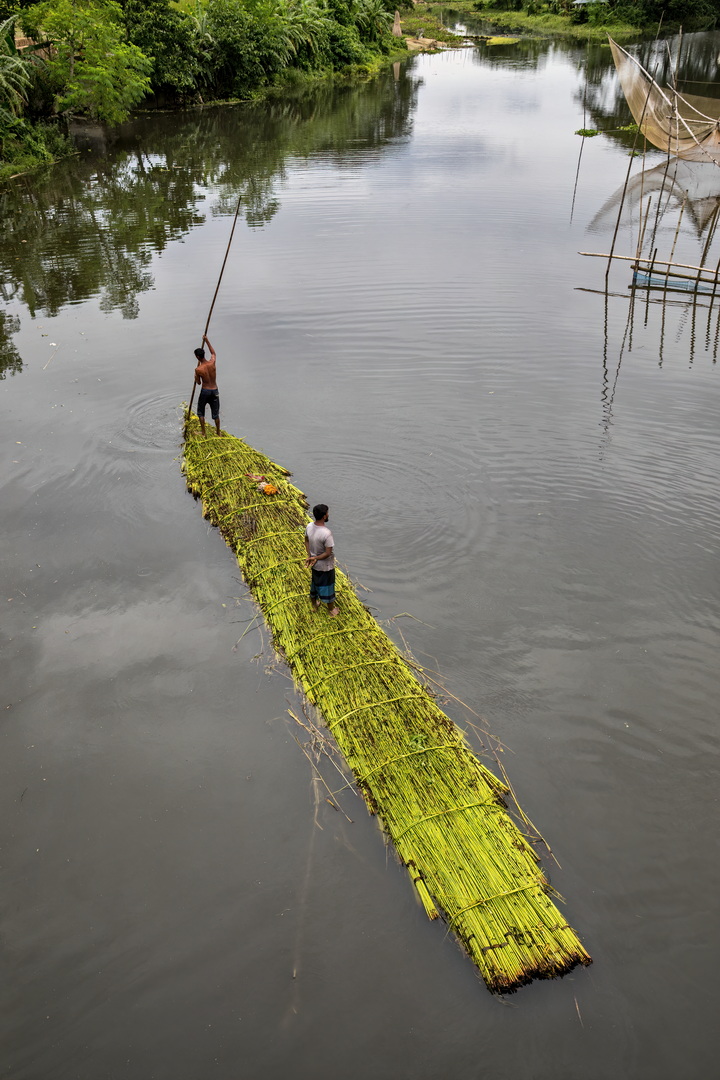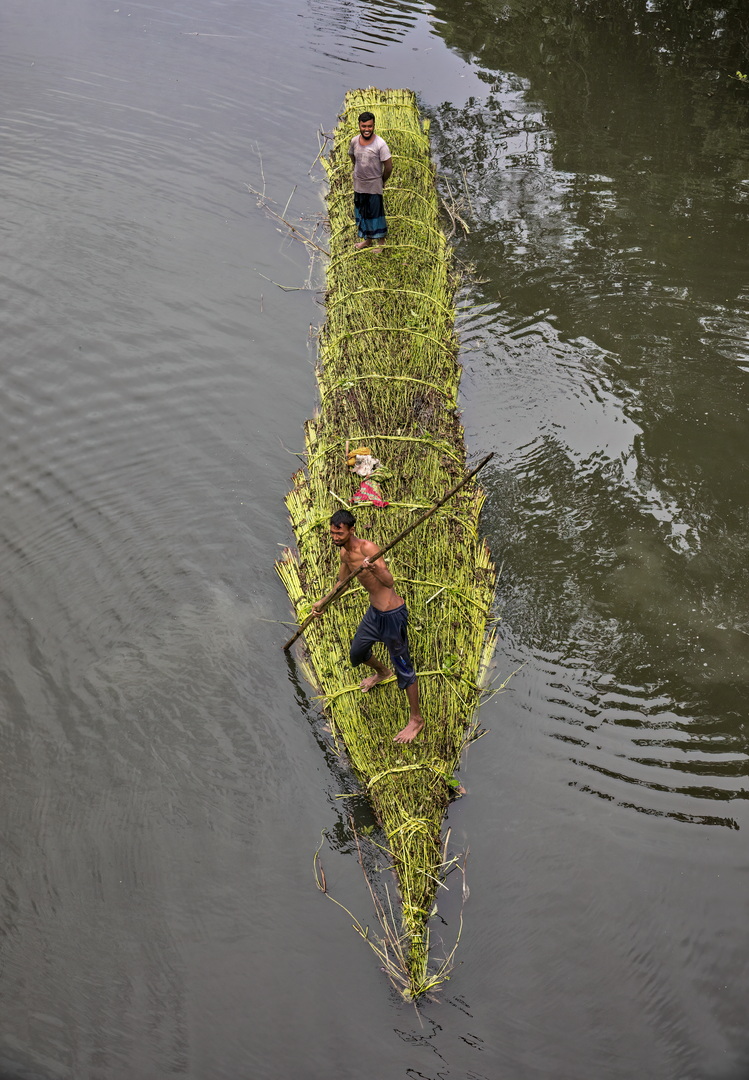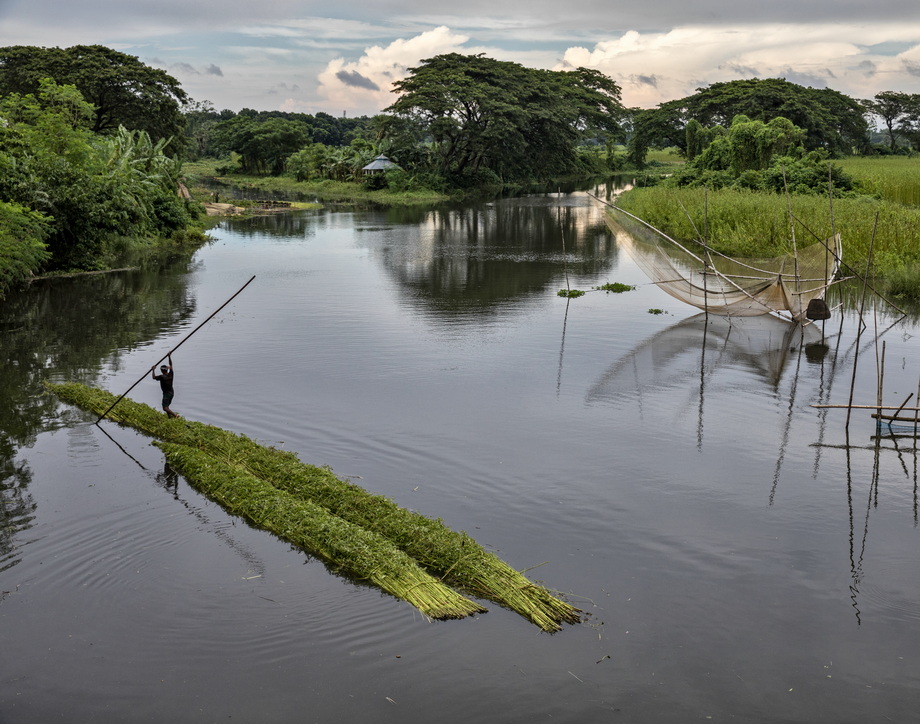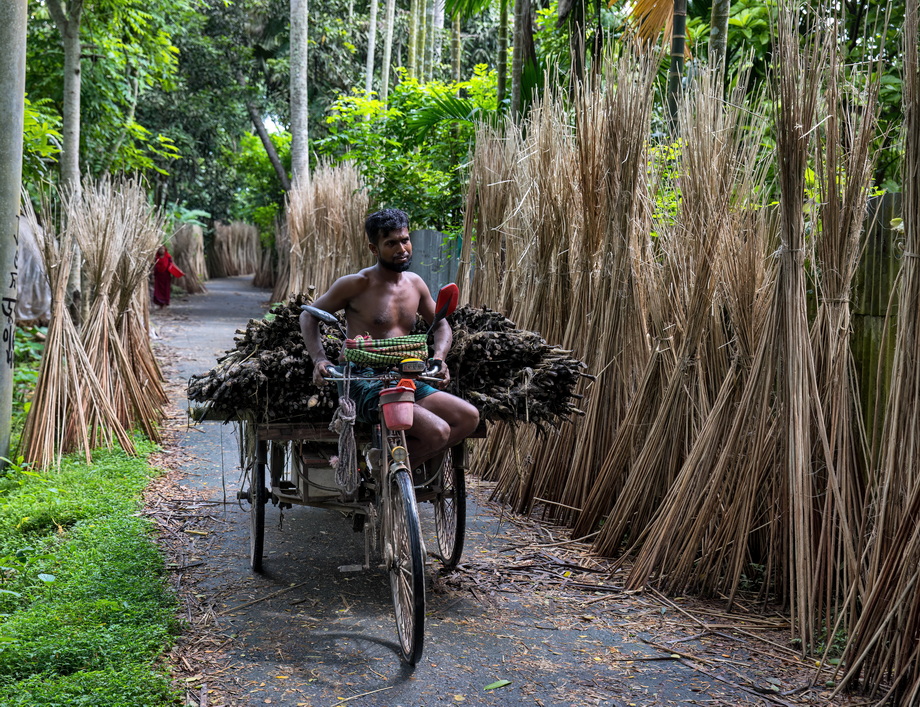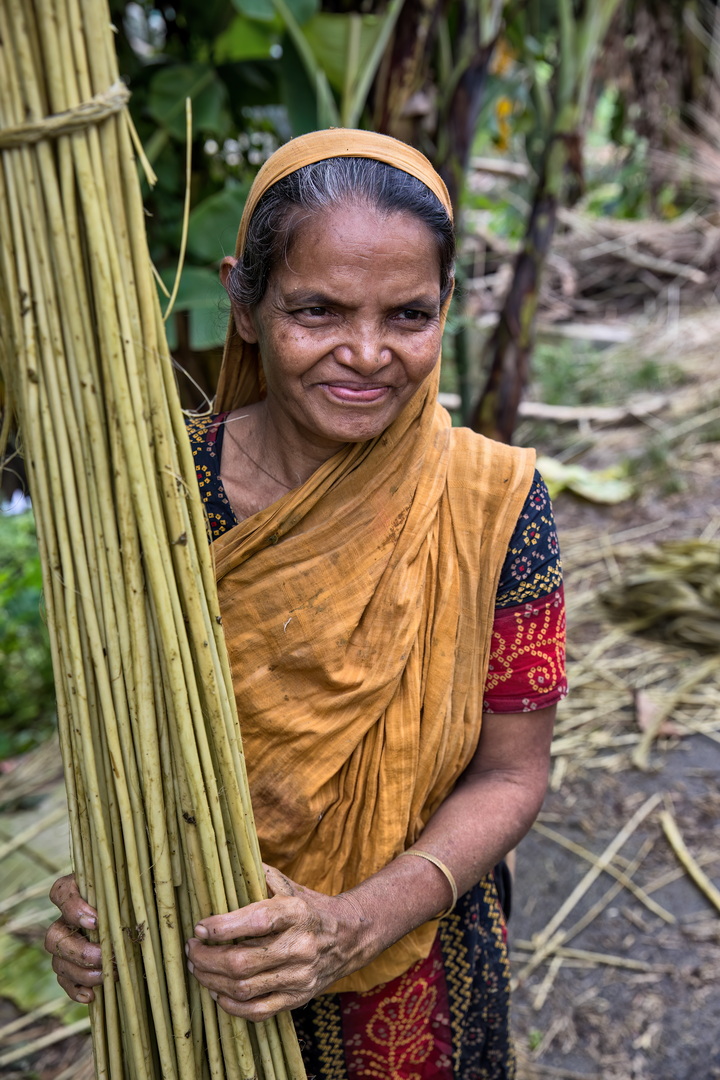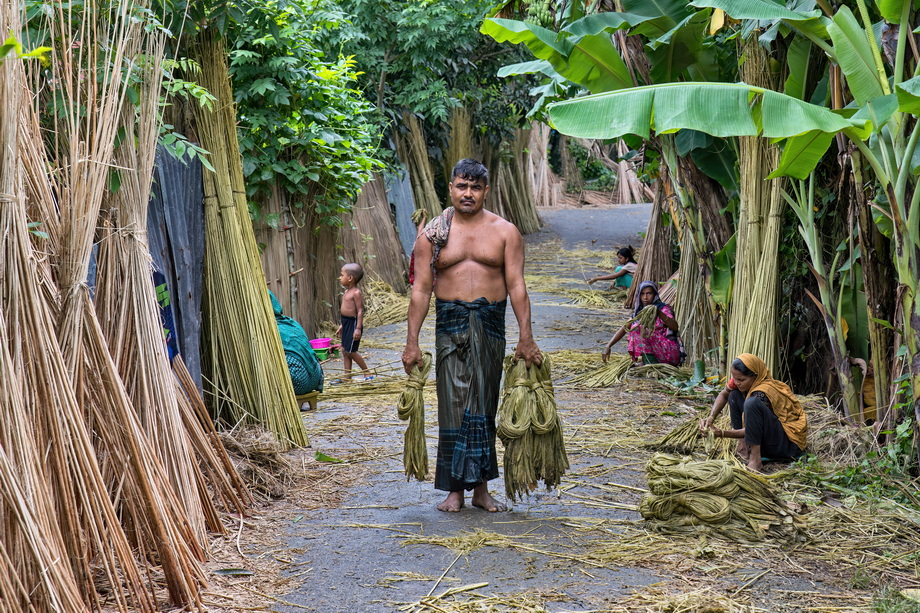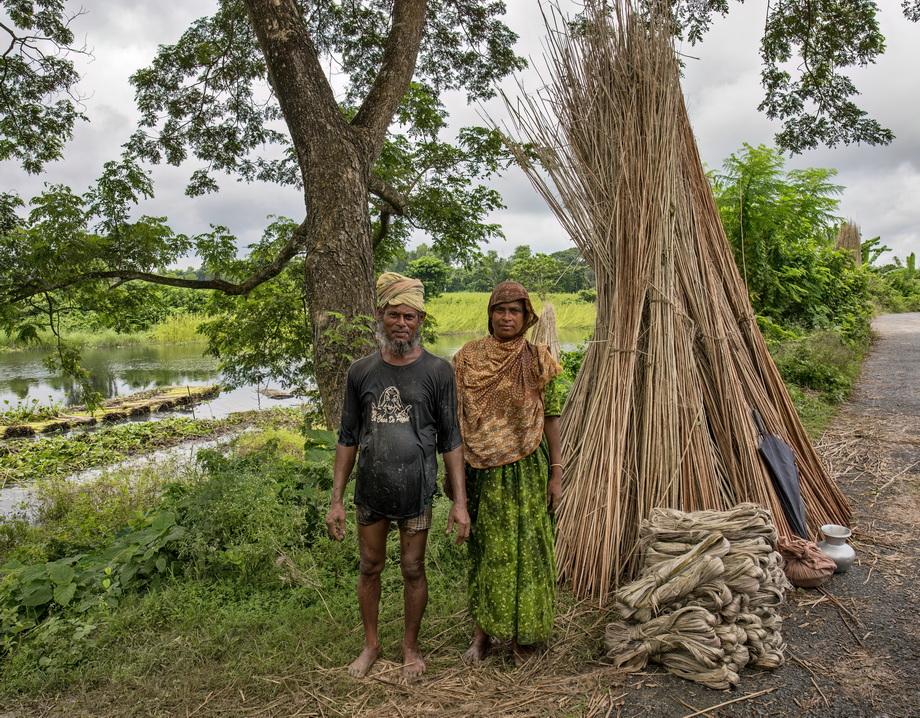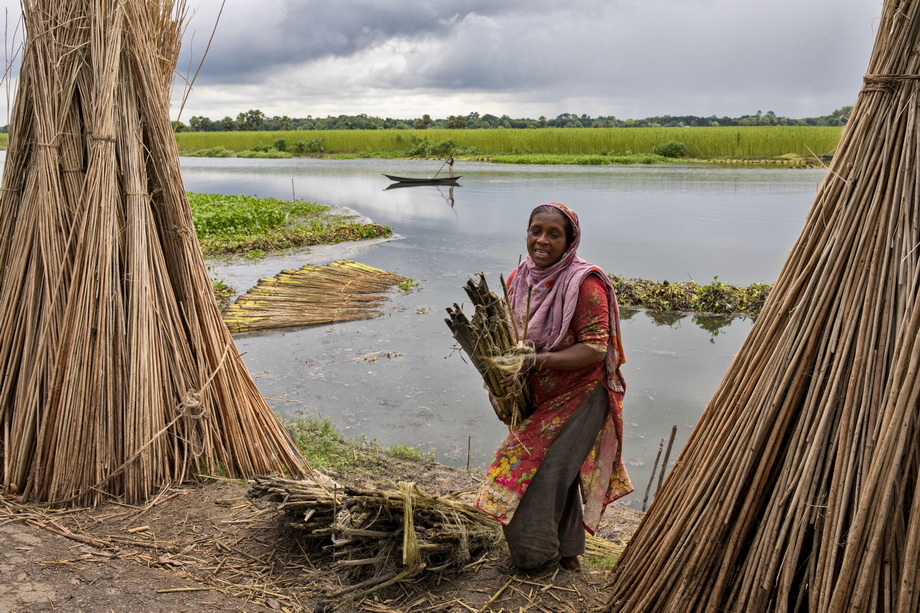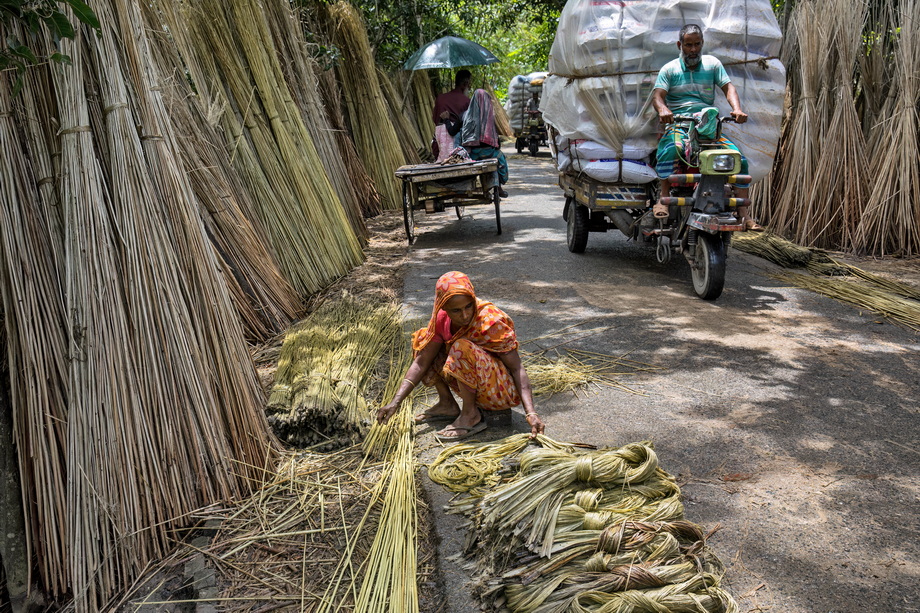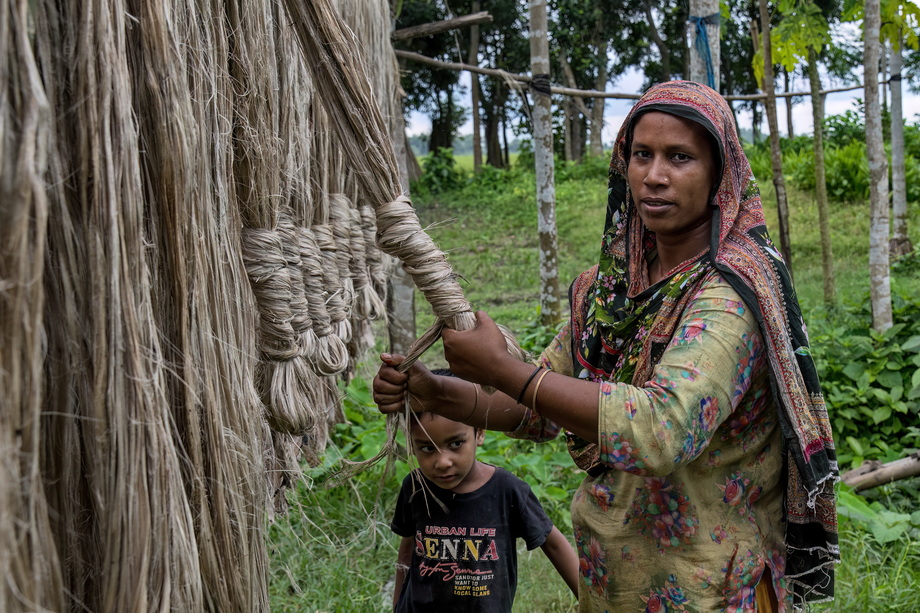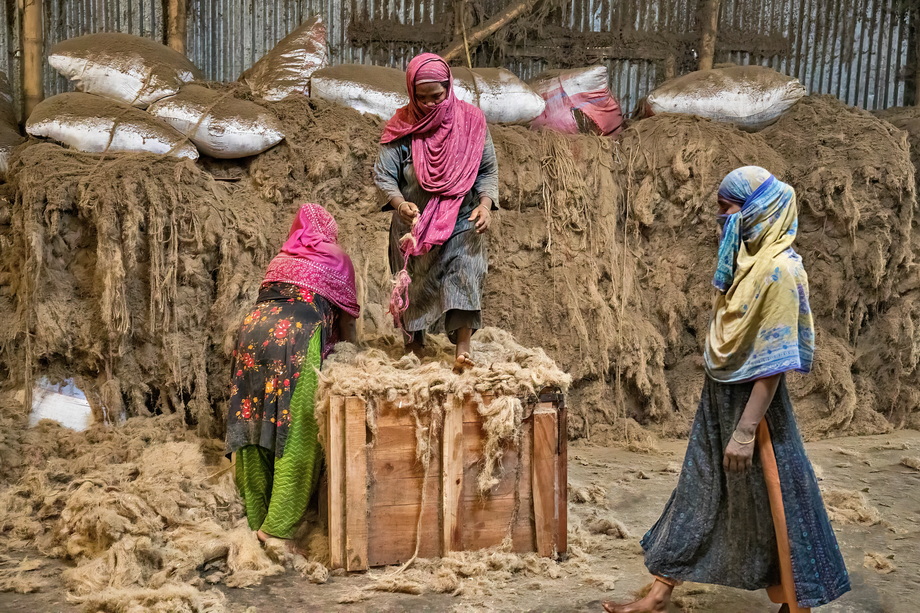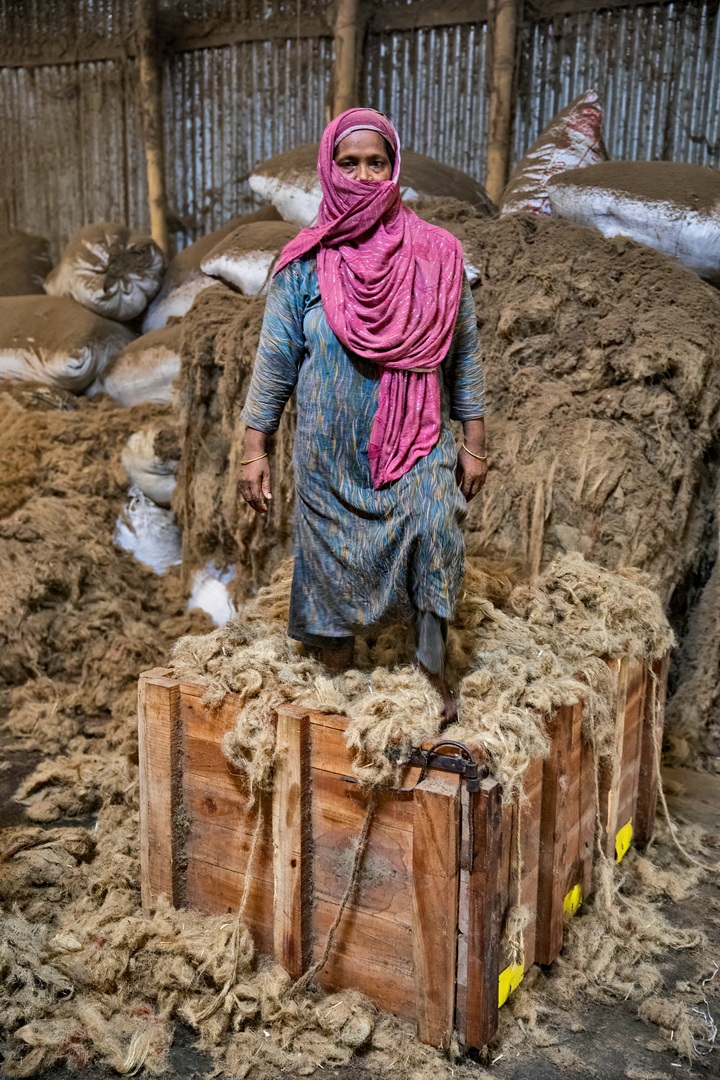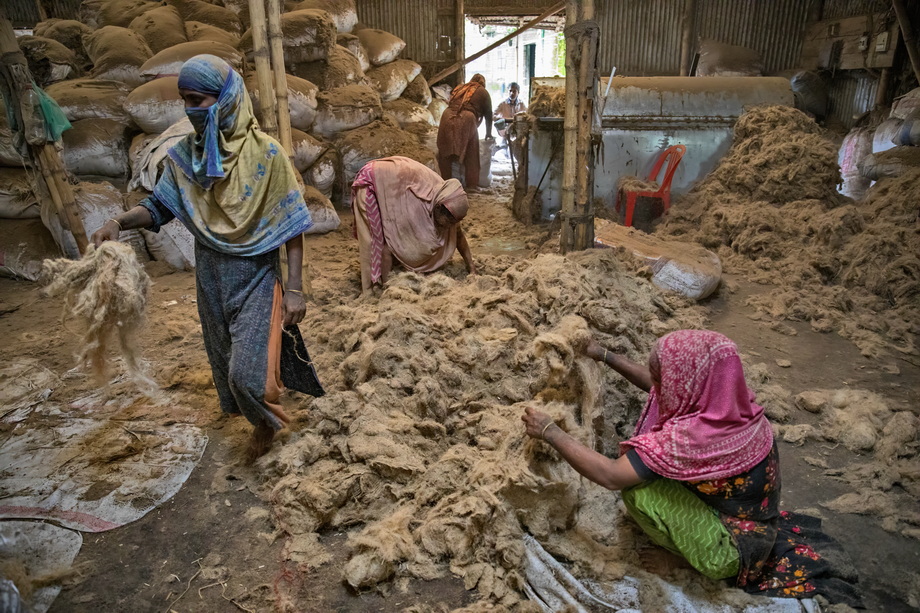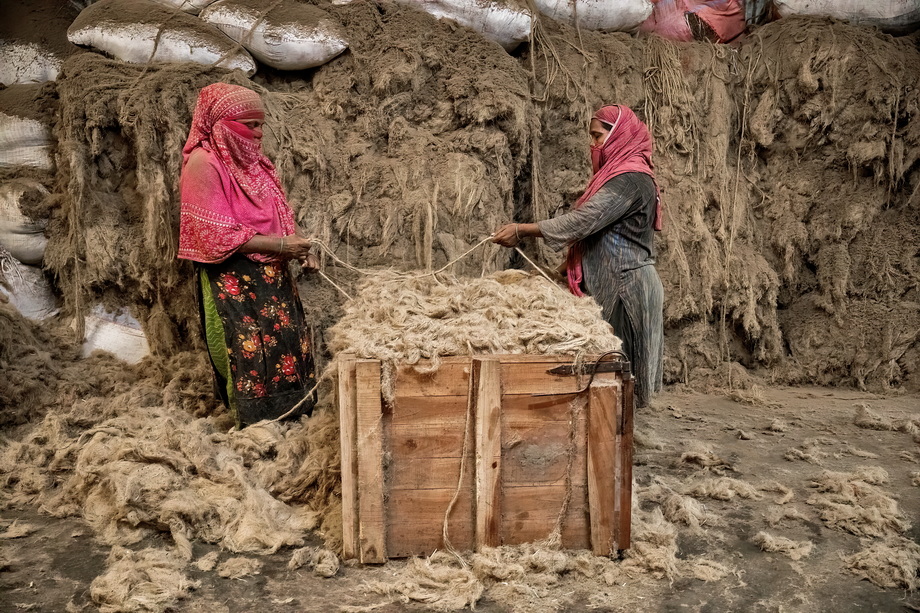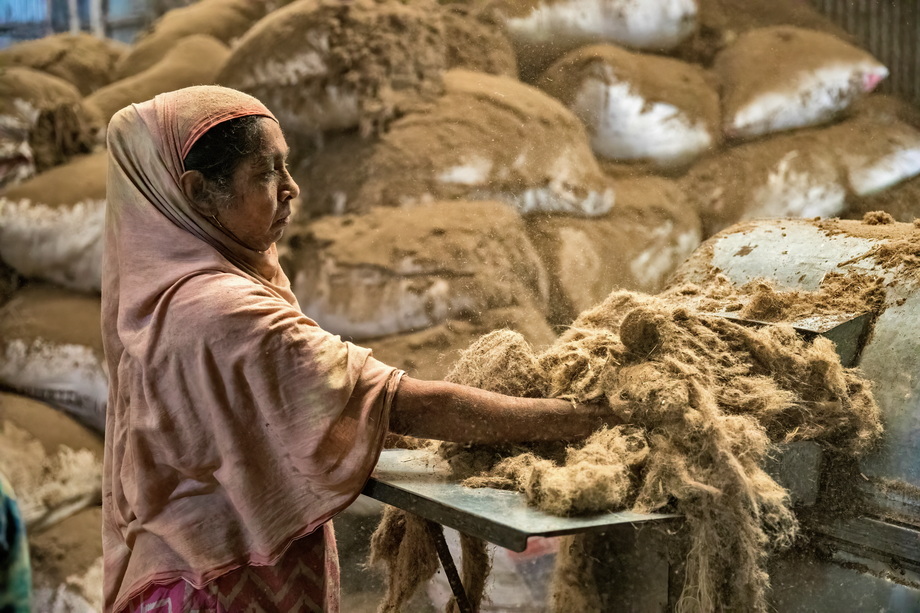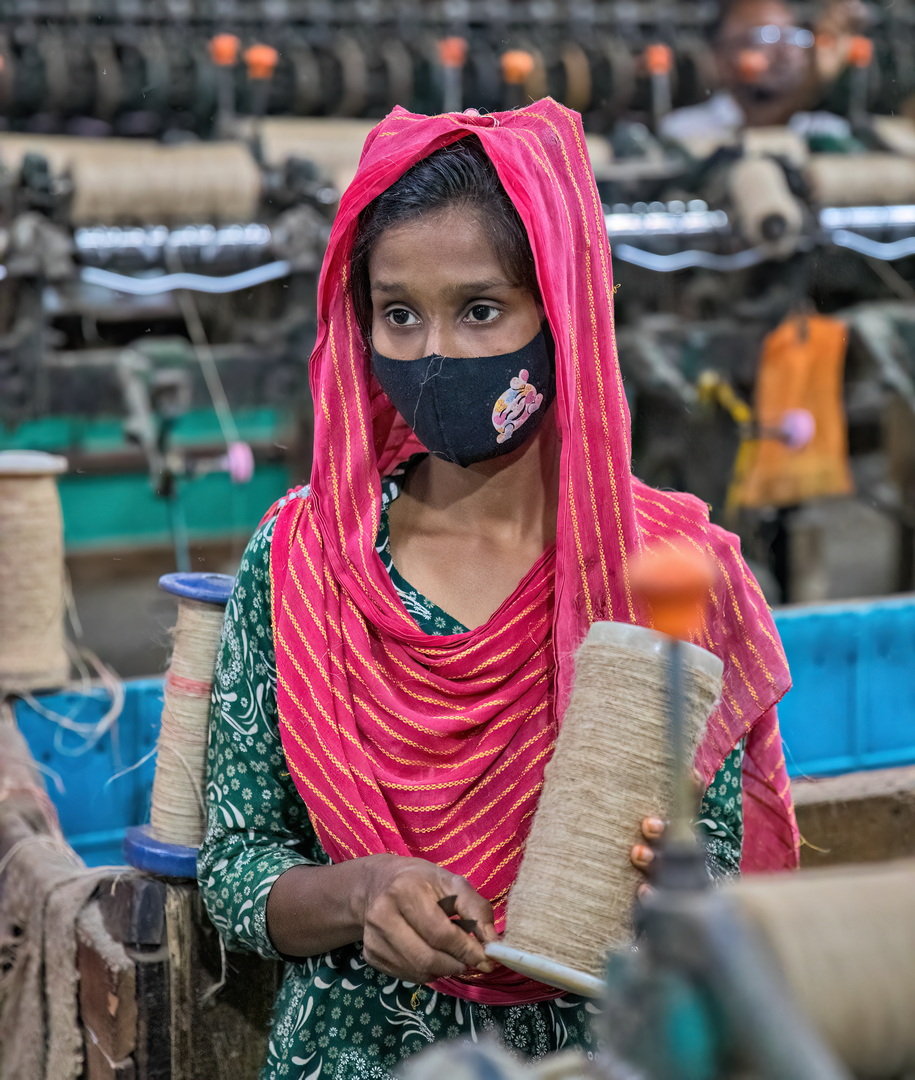

Jute harvesting and processing in Bangladesh


Jute, known as the "Golden Fiber" (sonali ash), is one of the most critical socio-economic and cultural pillars of Bangladesh. The country possesses the ideal environment for its cultivation—the fertile, alluvial soil and humid climate of the Ganges-Brahmaputra delta plain.
The life cycle of jute from a standing field crop to an industrial raw material relies heavily on a blend of traditional labor-intensive practices and modern manufacturing ecosystems.

The Harvesting and Retting Process

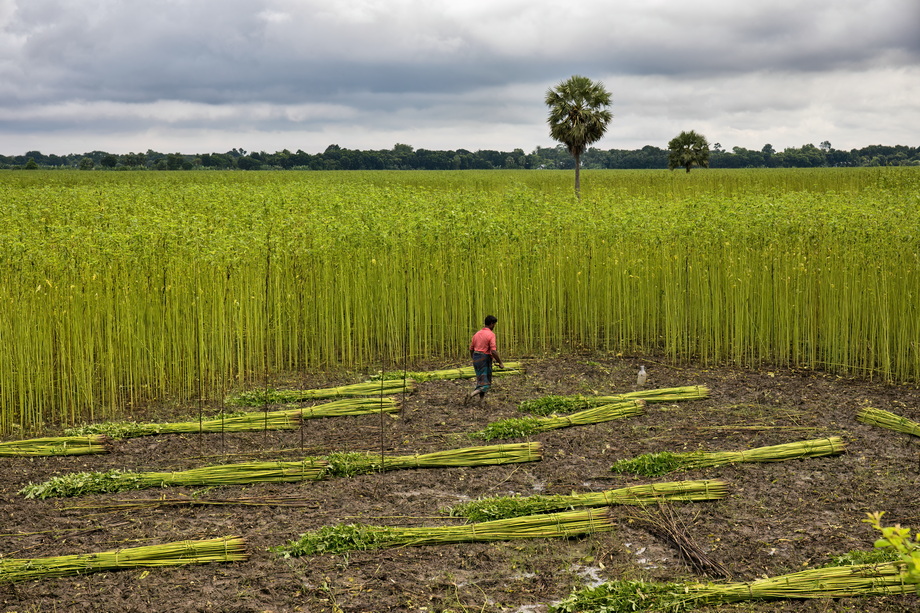
Jute cultivation follows a tight seasonal schedule, primarily sown between March and May and harvested between July and September.
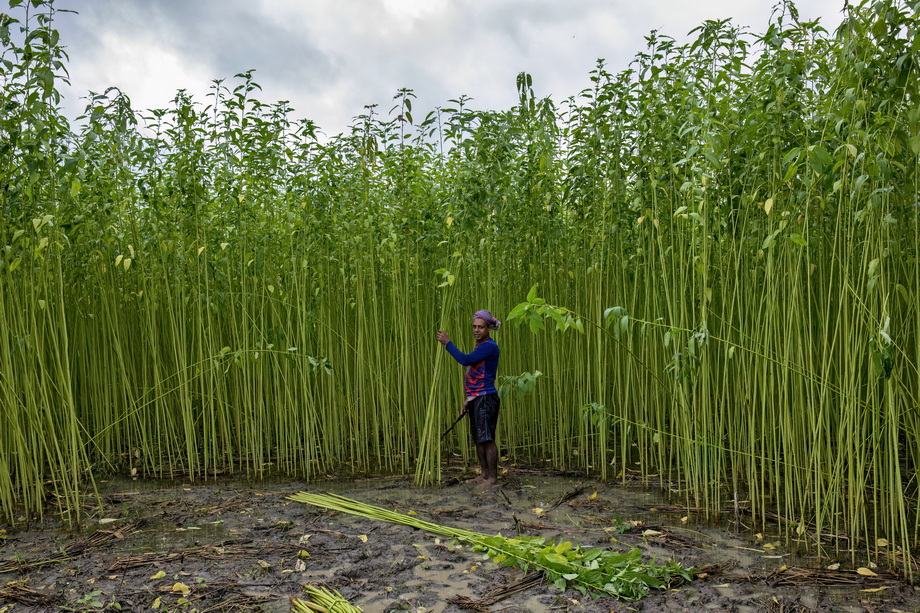
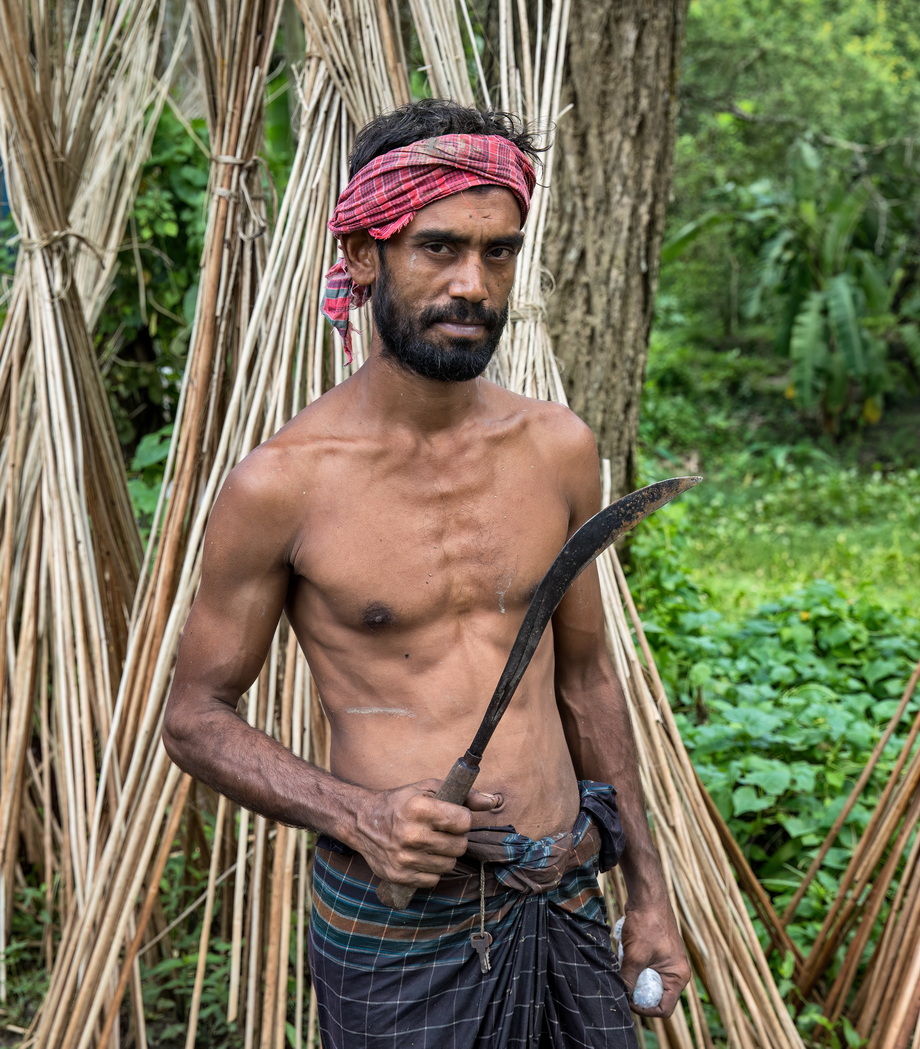
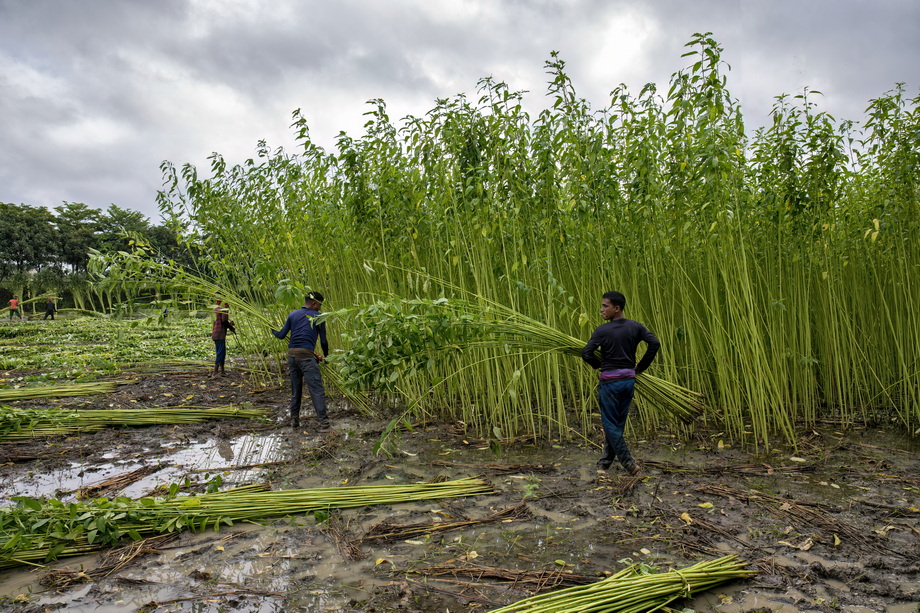
1. Harvesting: Stalks are harvested by hand using a sickle or machete. The ideal harvest time is when the plant is in its flowering stage; harvesting too early yields weak fibers, while harvesting too late results in coarse, woodier strands.
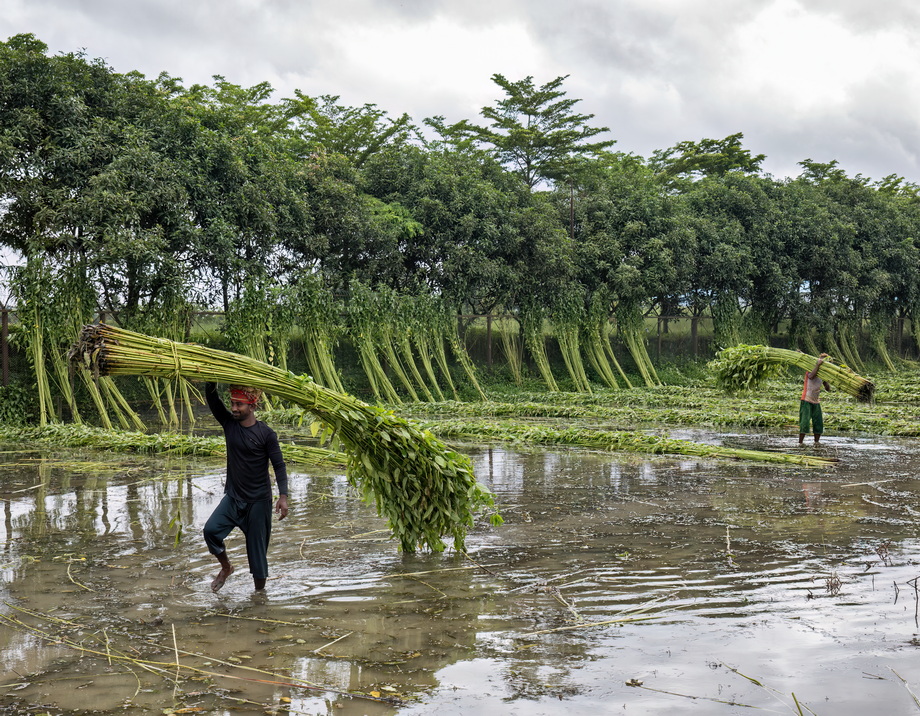
2. Defoliation and Bundling: After cutting, the stalks are left in the field for 2–3 days to allow the leaves to shed naturally. The bare stalks are then sorted by thickness and tied into bundles.
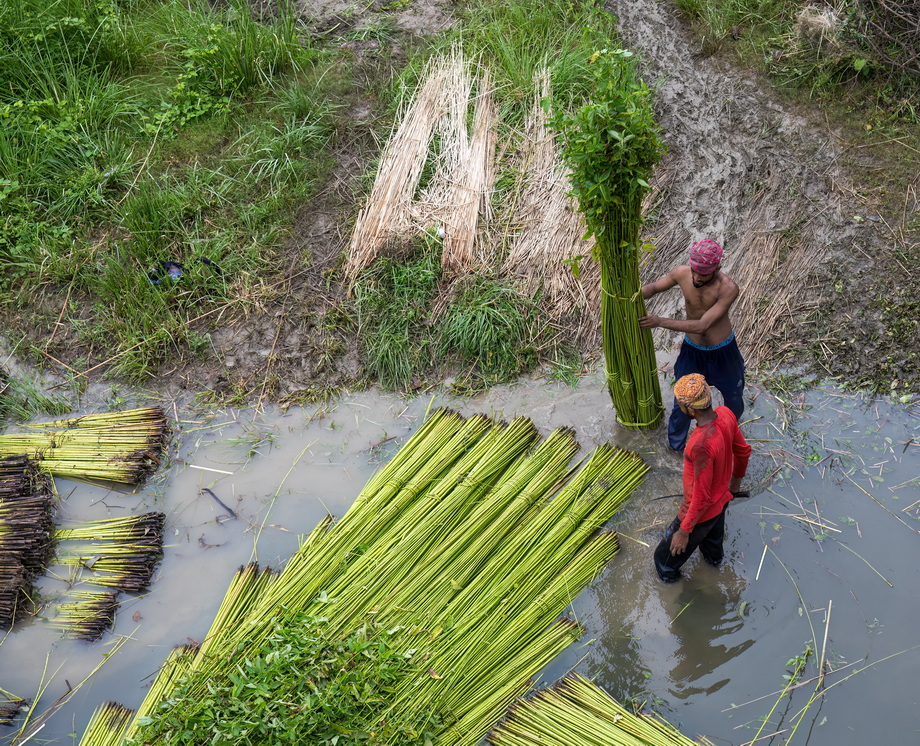
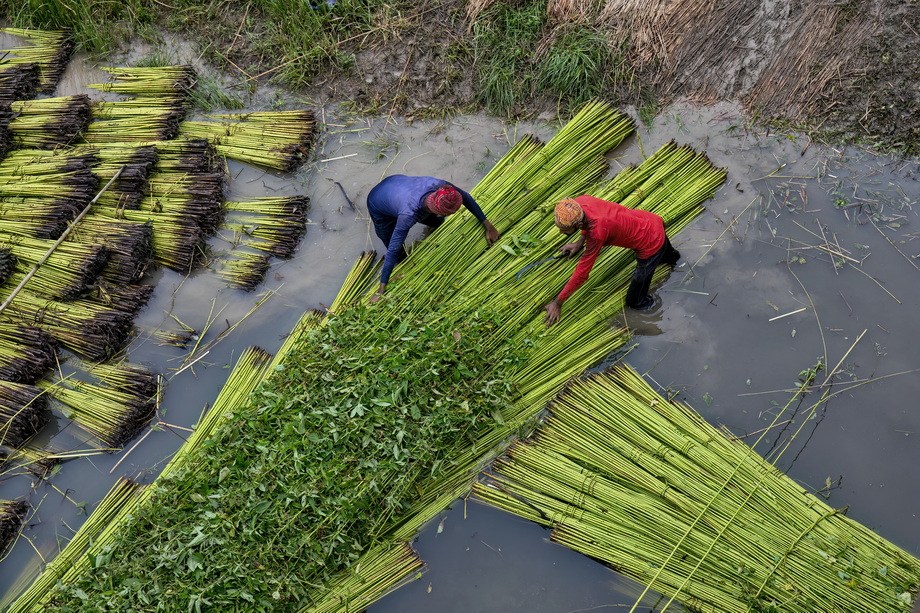
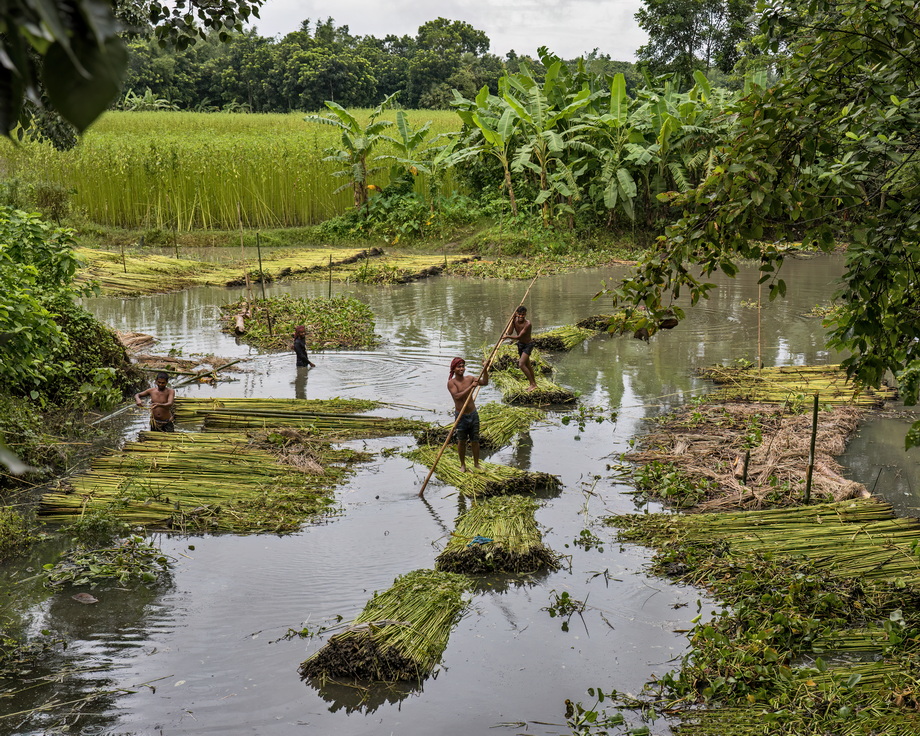
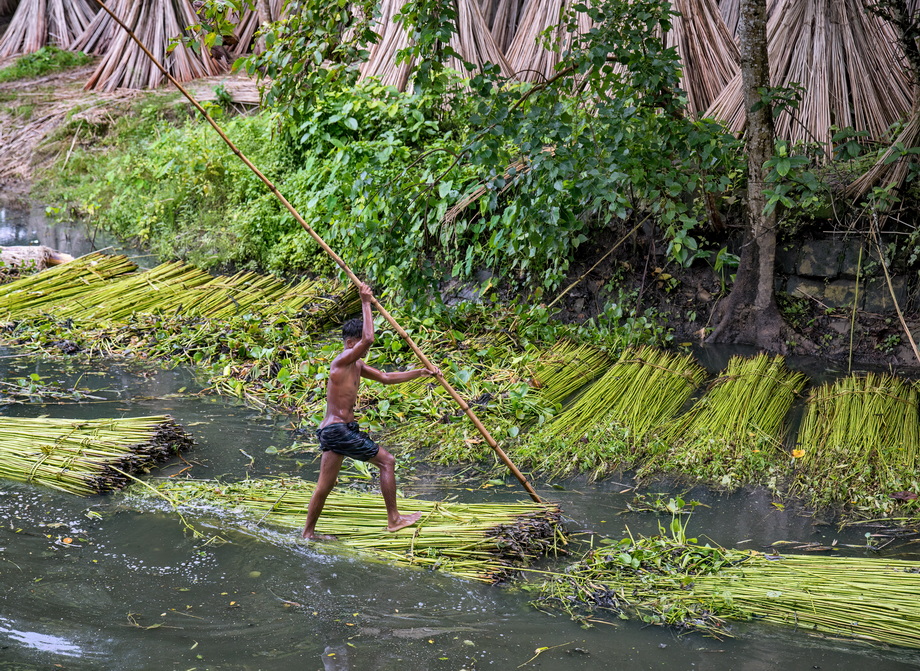
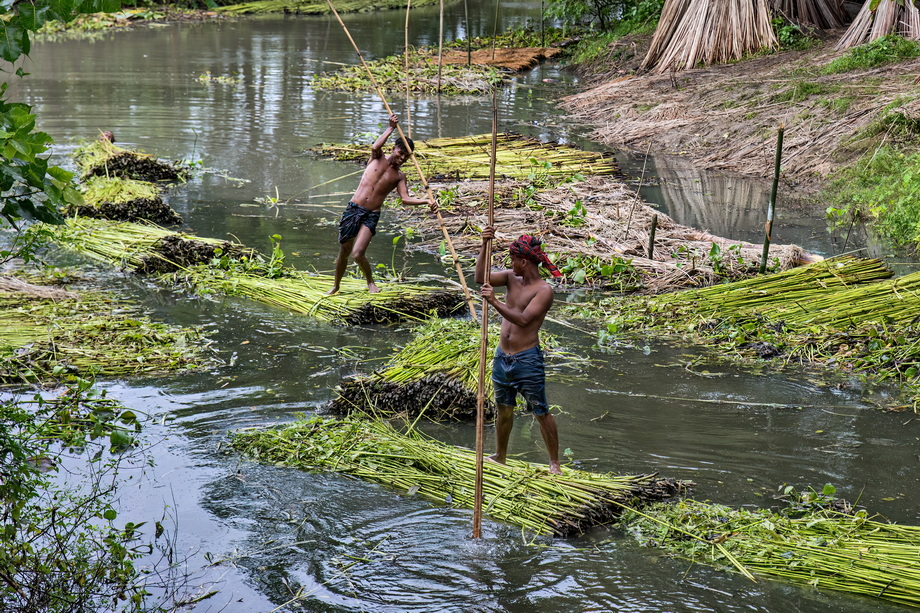
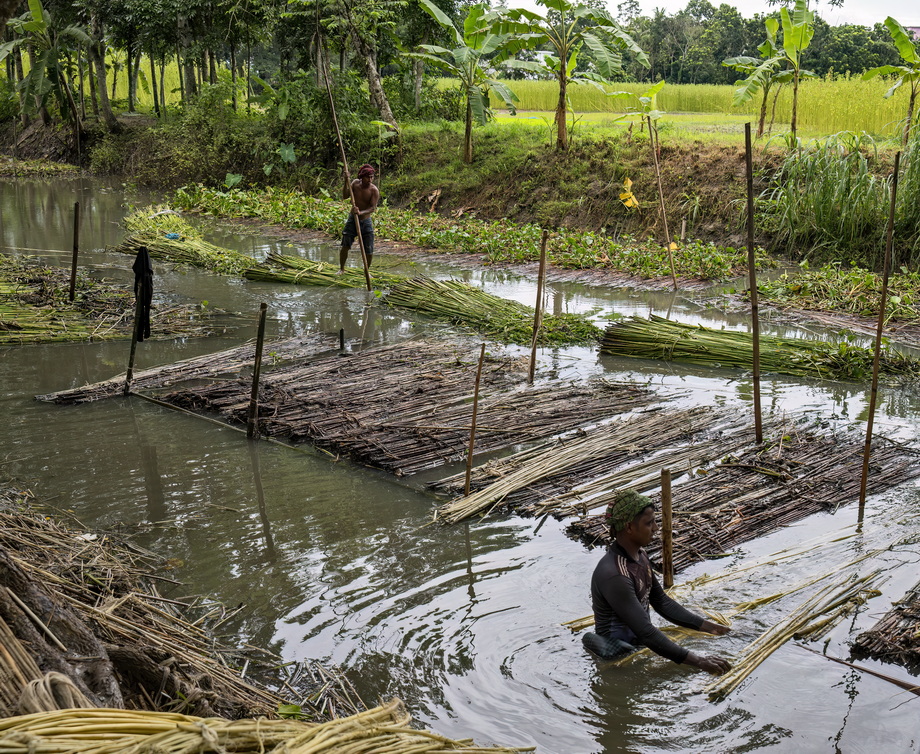
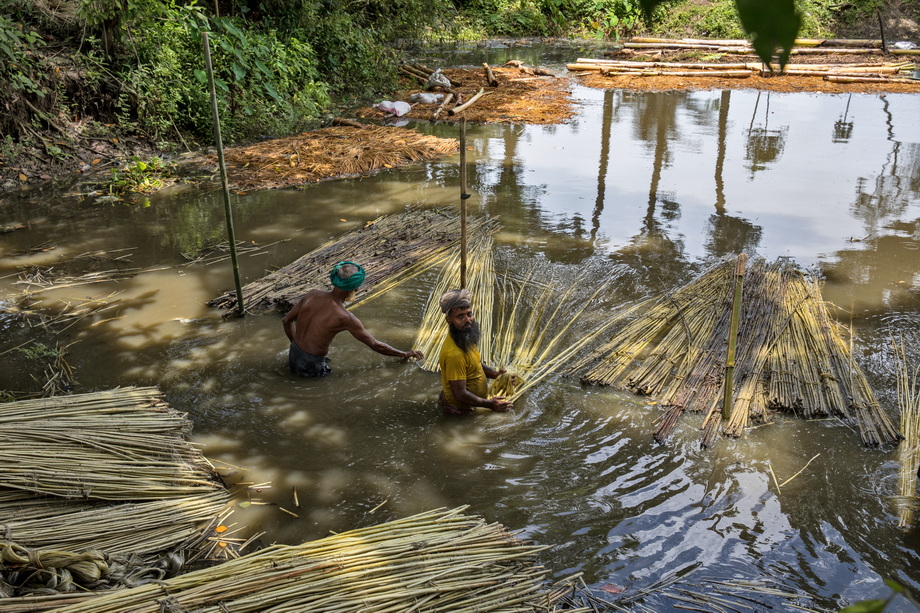
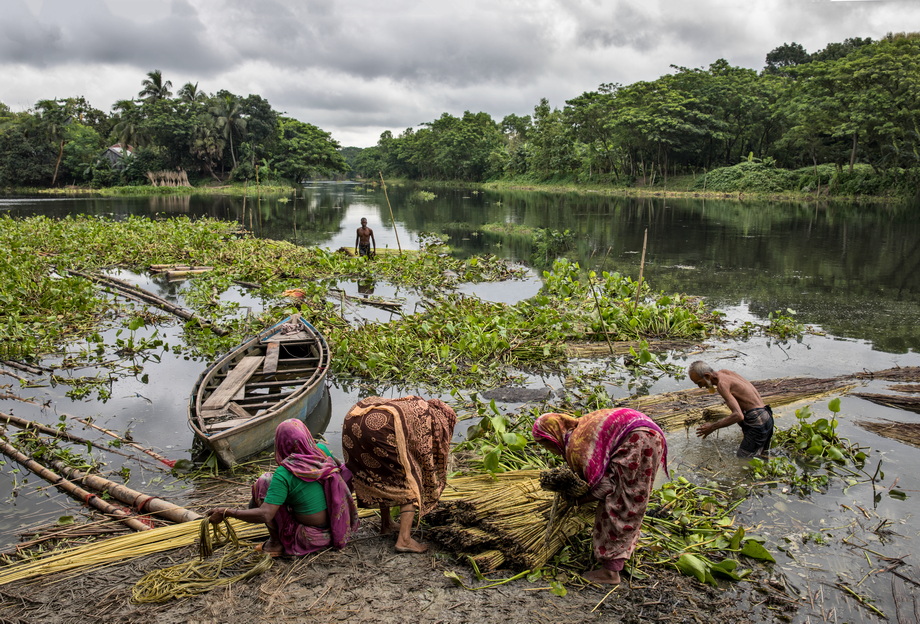
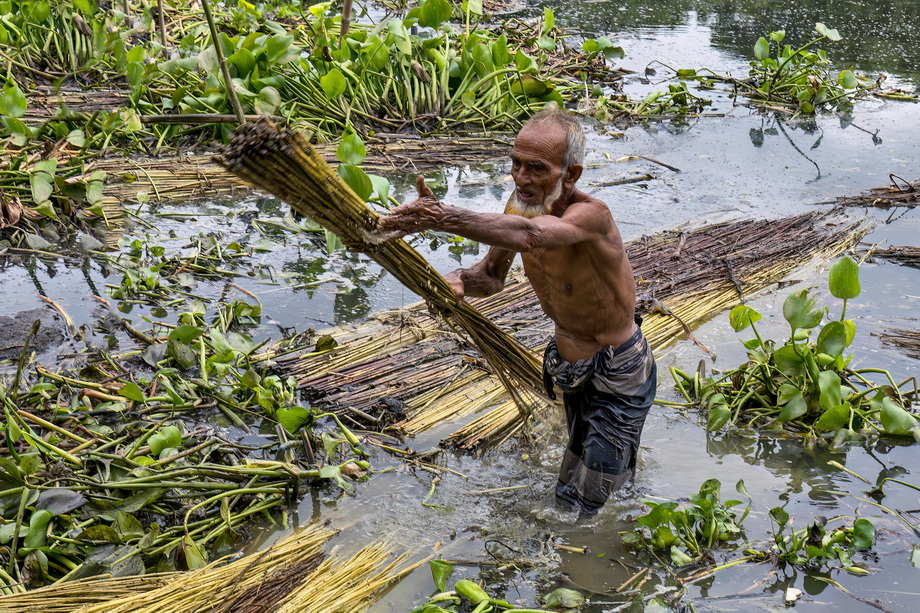
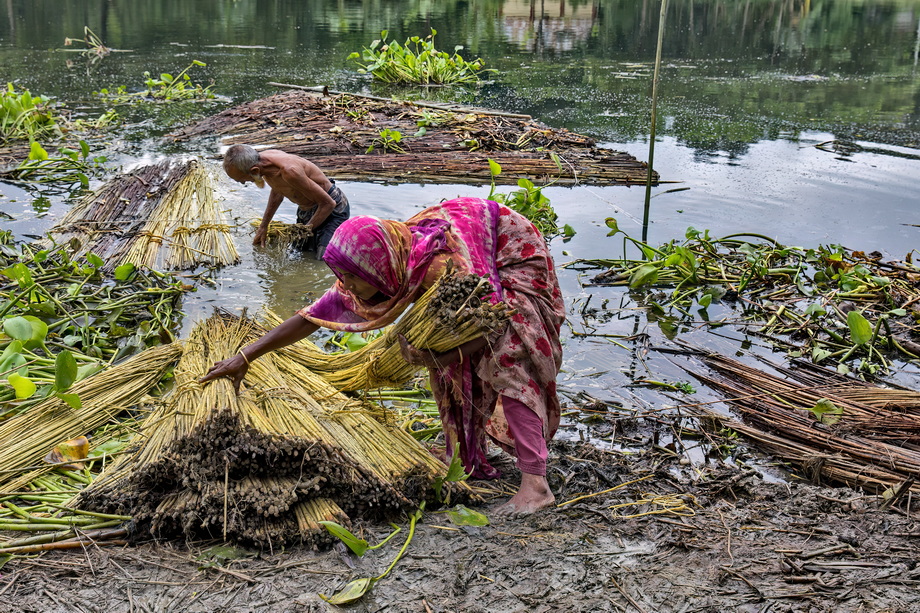
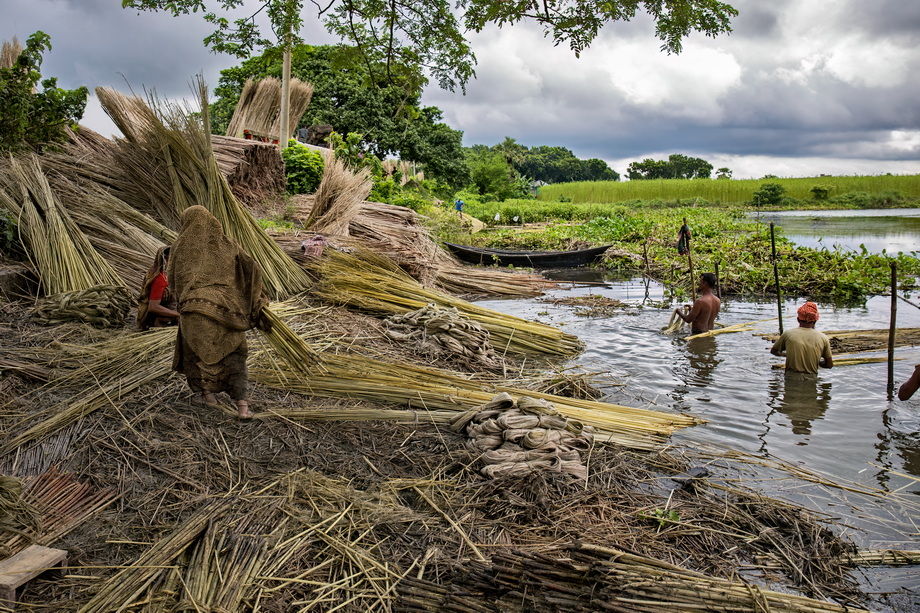
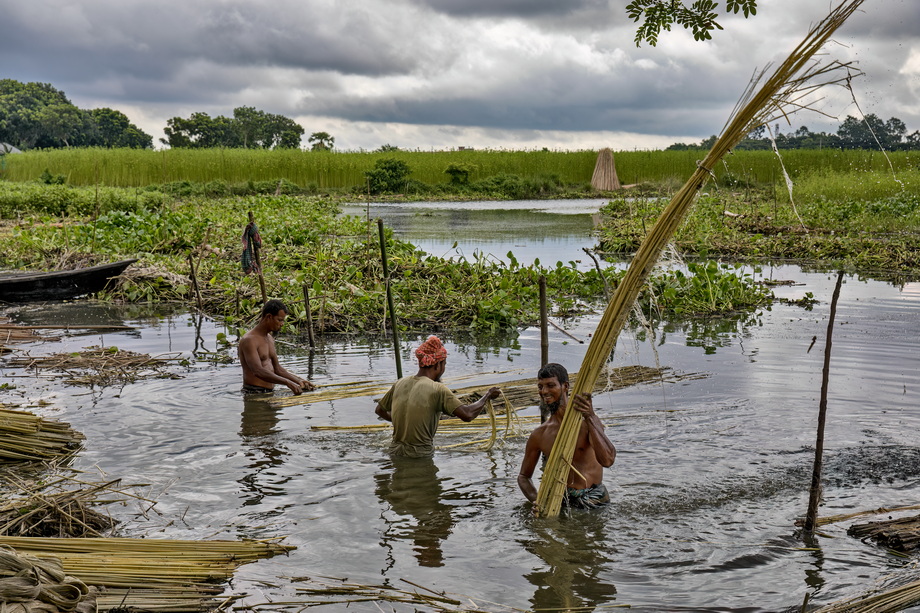
3. Retting (Jag Deoa): This is the most crucial biological process. Bundles are submerged in pools, ditches, rivers, or canals for 2 to 3 weeks. Microorganisms and water soften the outer bark, dissolving the non-fibrous pectin and gums to unbind the fiber from the inner woody stalk (jute stick).
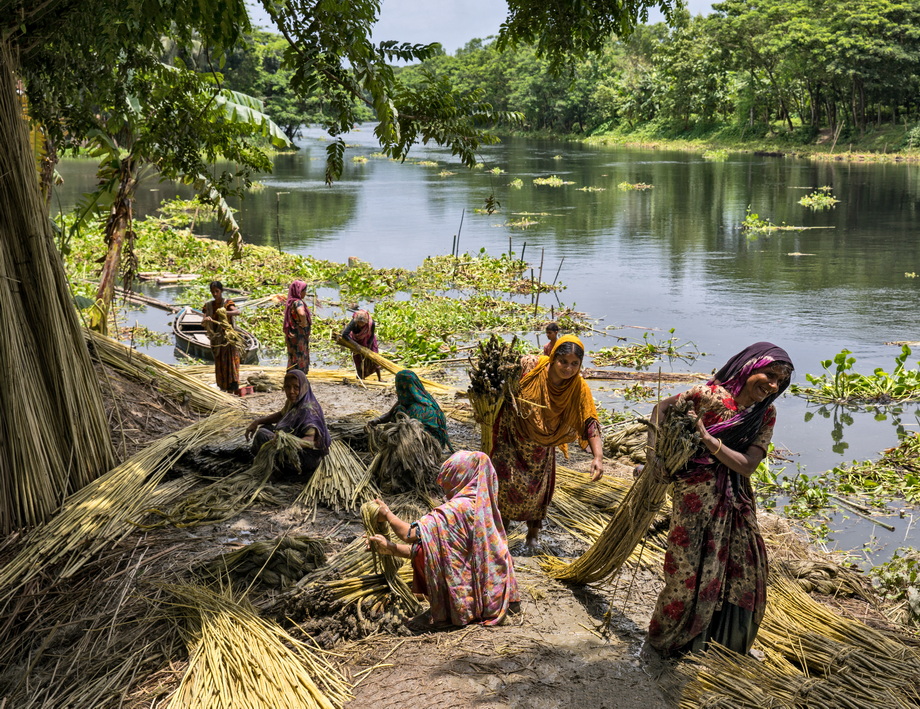
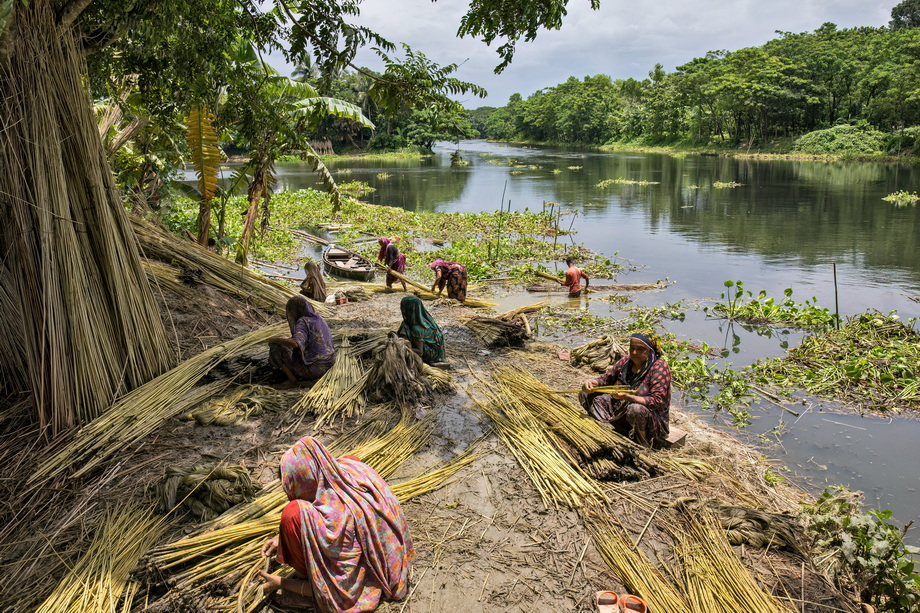
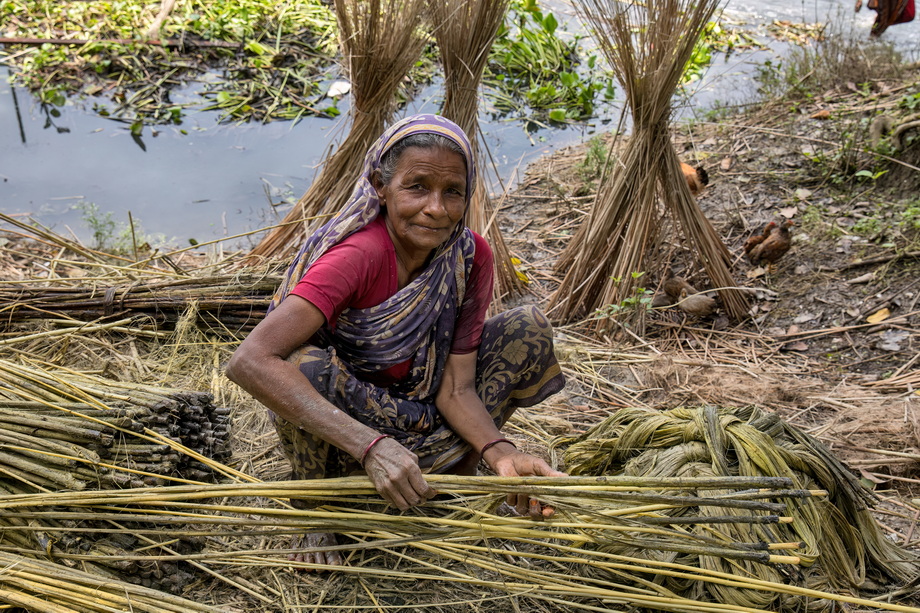
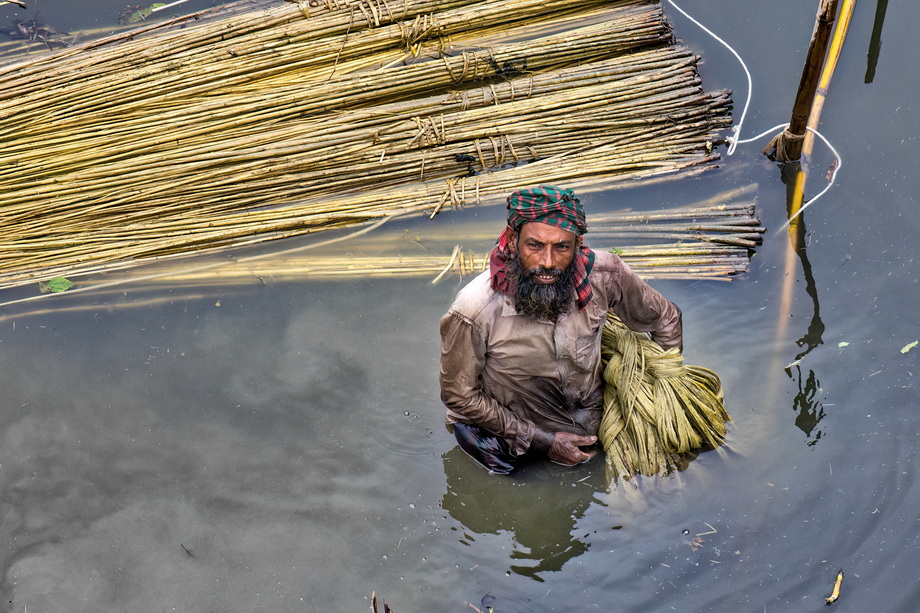
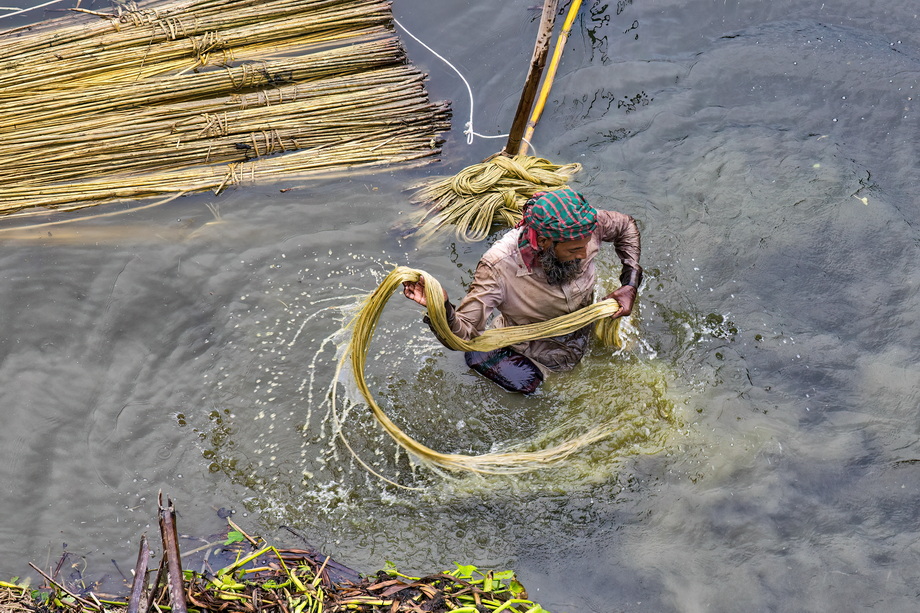
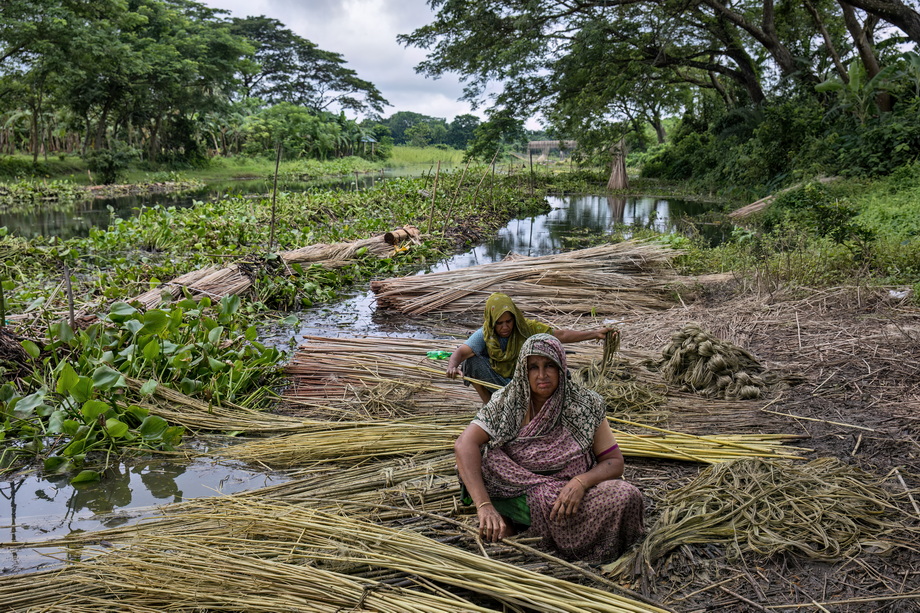
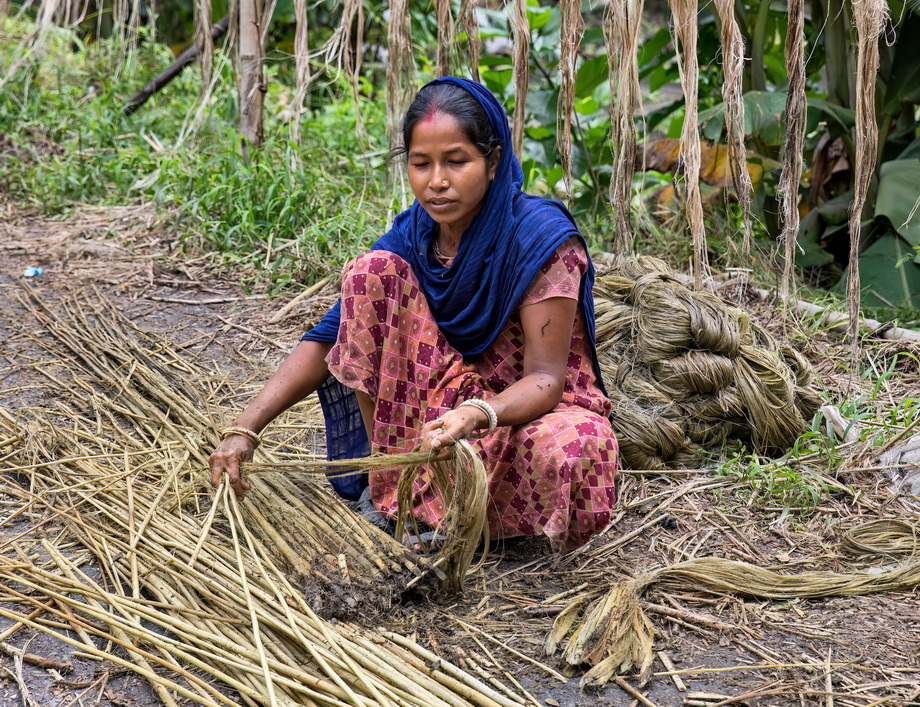
4. Fiber Extraction: Once retting is complete, labourers stand waist-deep in water to extract the fibers. In Bangladesh, workers primarily use the Single Stem Stripping method. They beat the root ends with a mallet to loosen the fibers and then strip the ribbons of golden fiber away from the inner wooden core by hand.
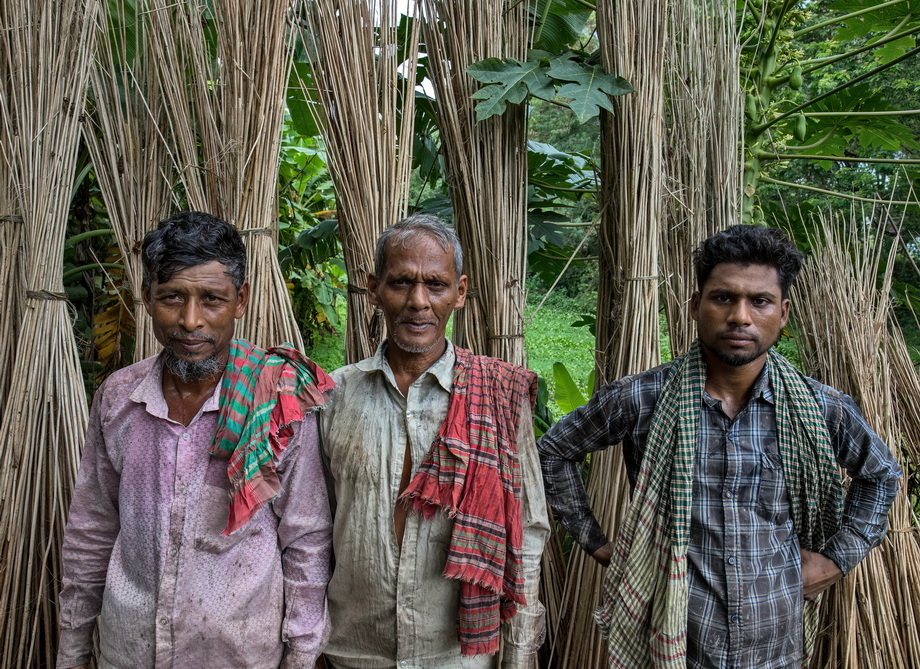
5. Washing and Drying: The extracted fibers are thoroughly washed in clean running water to remove mud and decayed matter. They are then hung on bamboo racks or lines to dry under the sun for several days.

Industrial Processing and Market Supply Chain

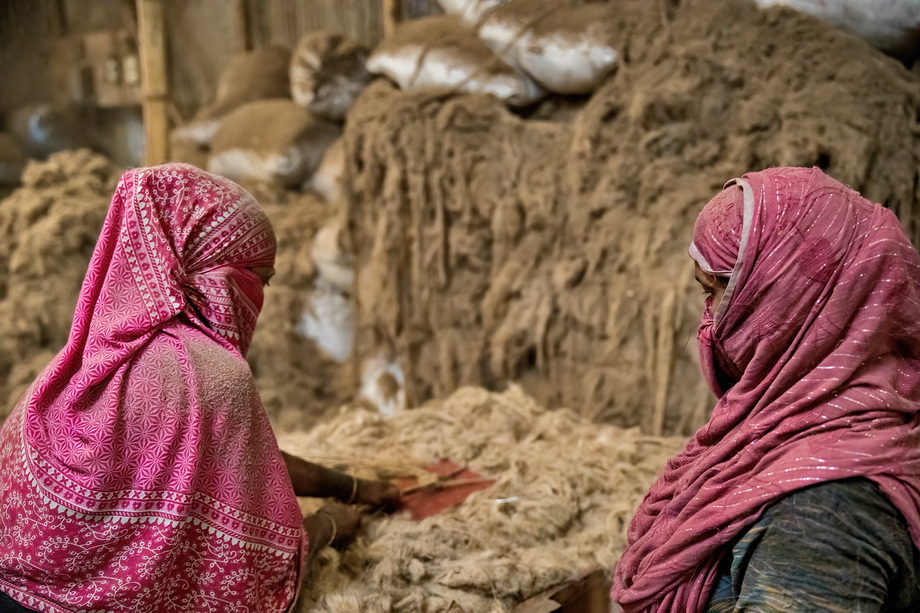
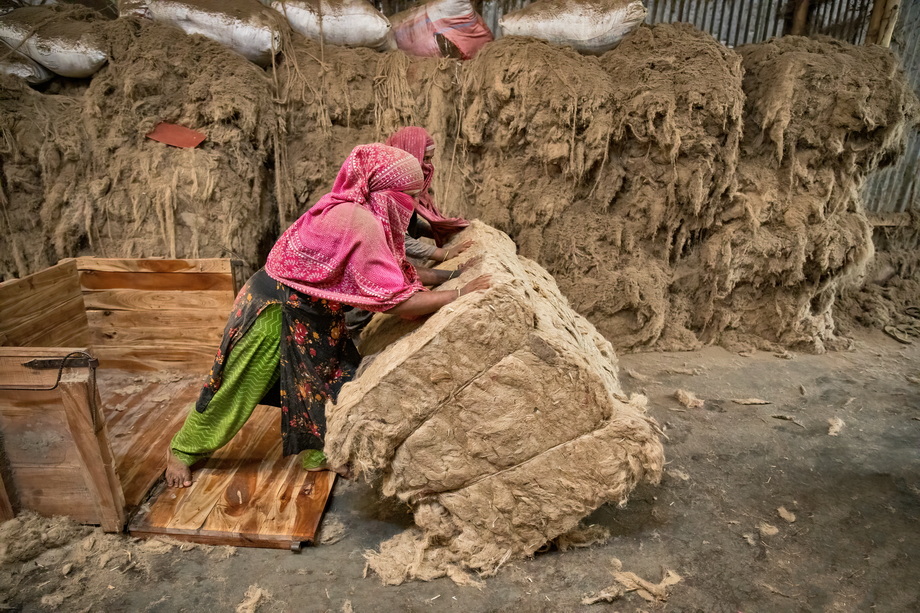
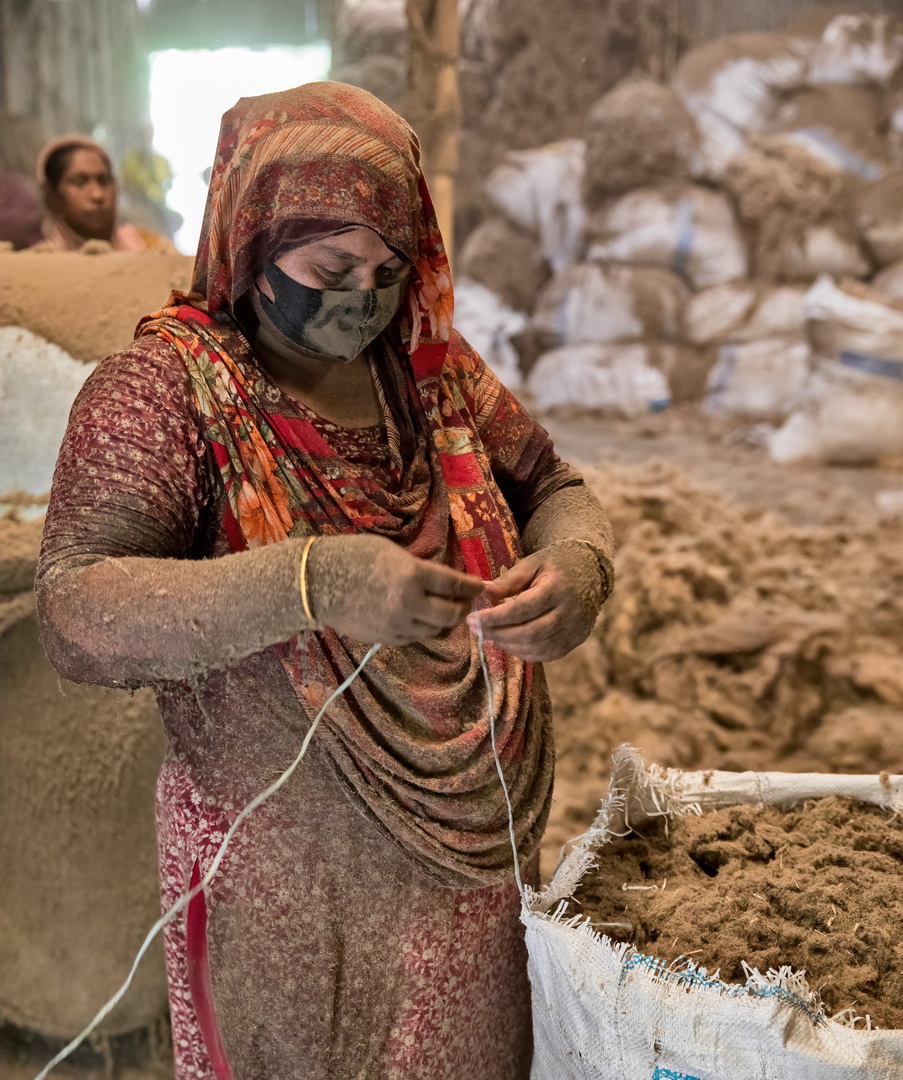
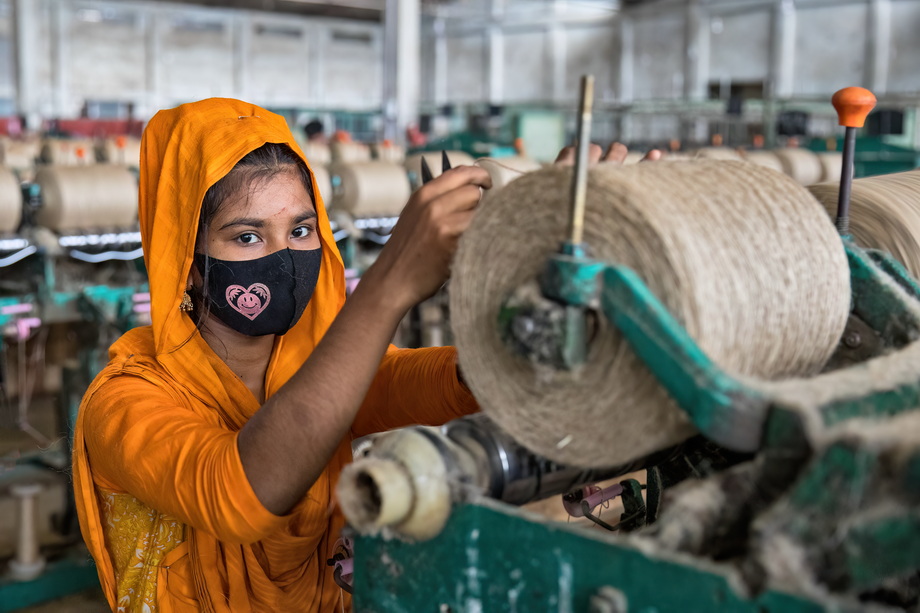
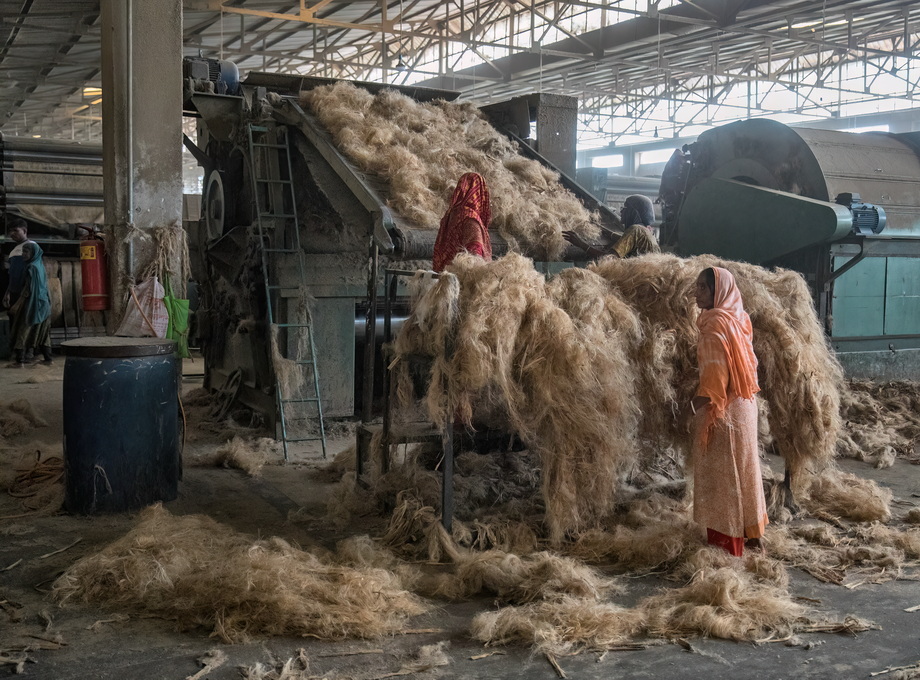
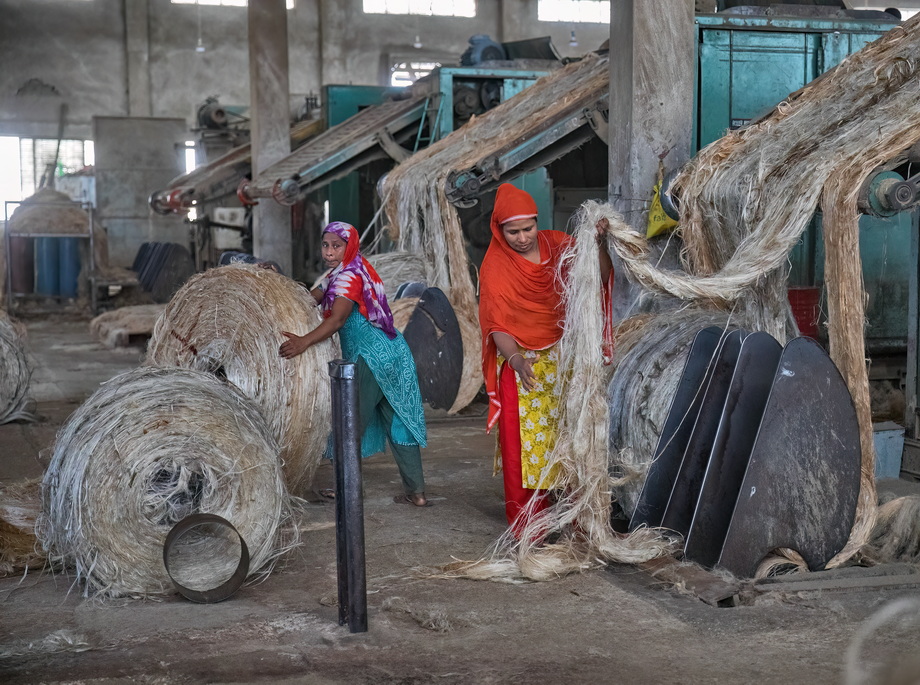
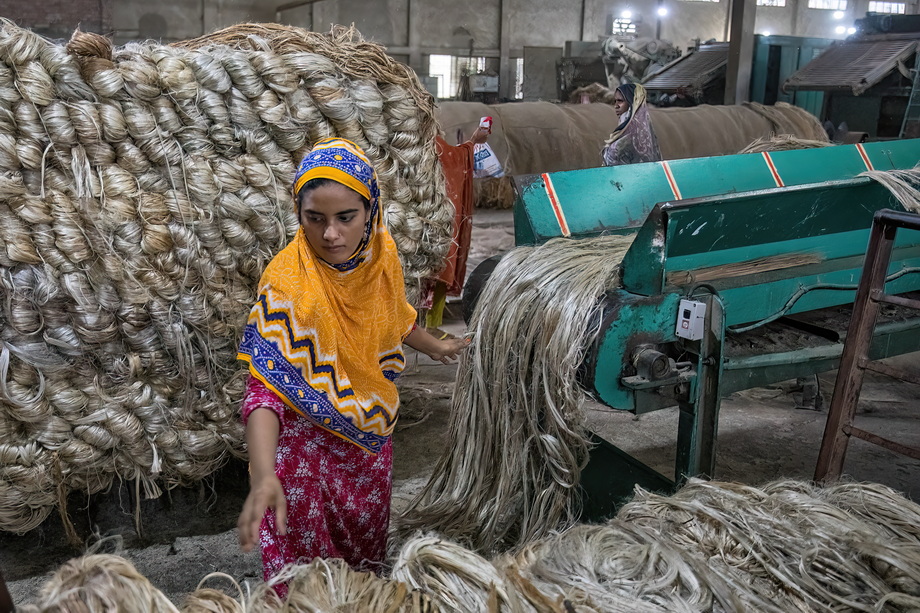
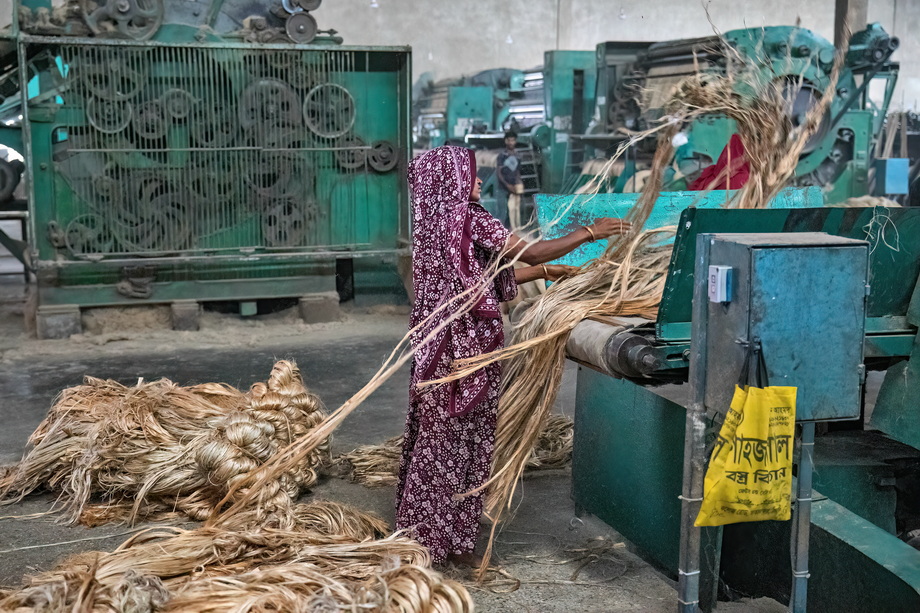
Once dry, the raw jute is collected, categorized by quality (grading), and packed into tightly pressed bales to be sold to regional traders or directly to local mills. Because raw jute is naturally stiff, mills treat the fibers with specialized emulsified oils (historically whale oil, now vegetable or mineral-based oils) and water to make them pliable enough for machinery.
Fibers are fed through massive carding machines that comb, parallelize, and blend them into a long, continuous ribbon called a "sliver."
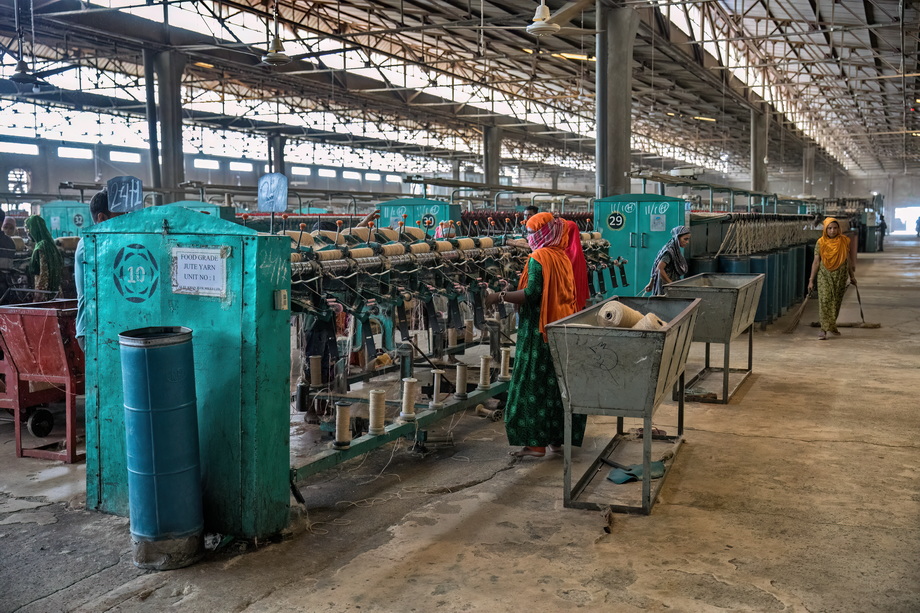
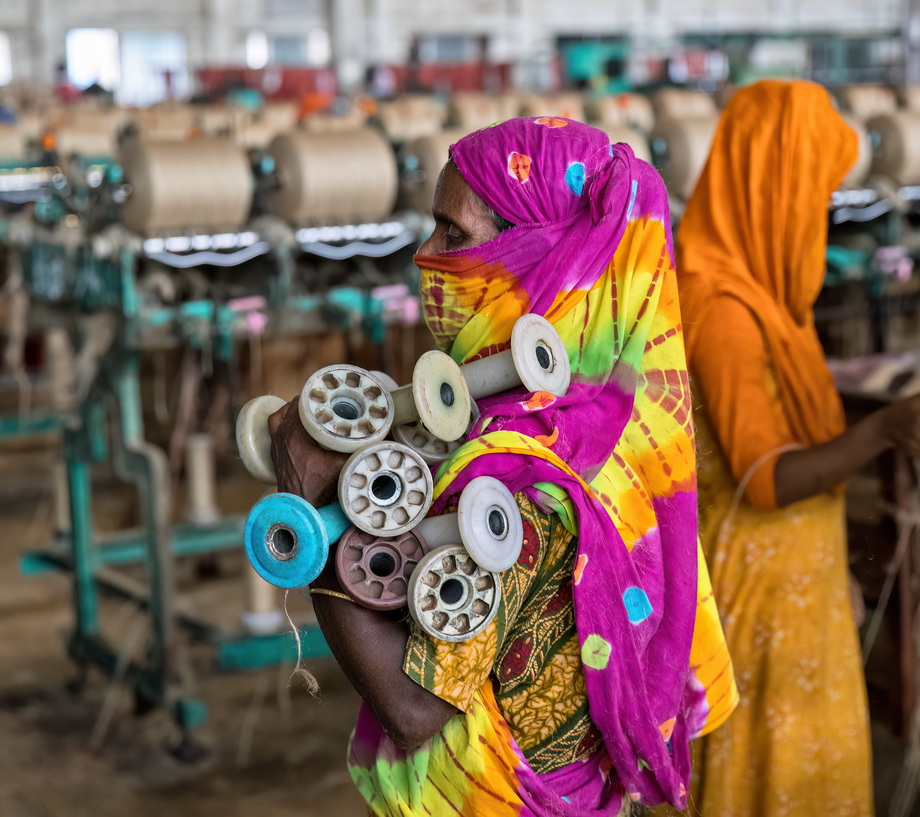
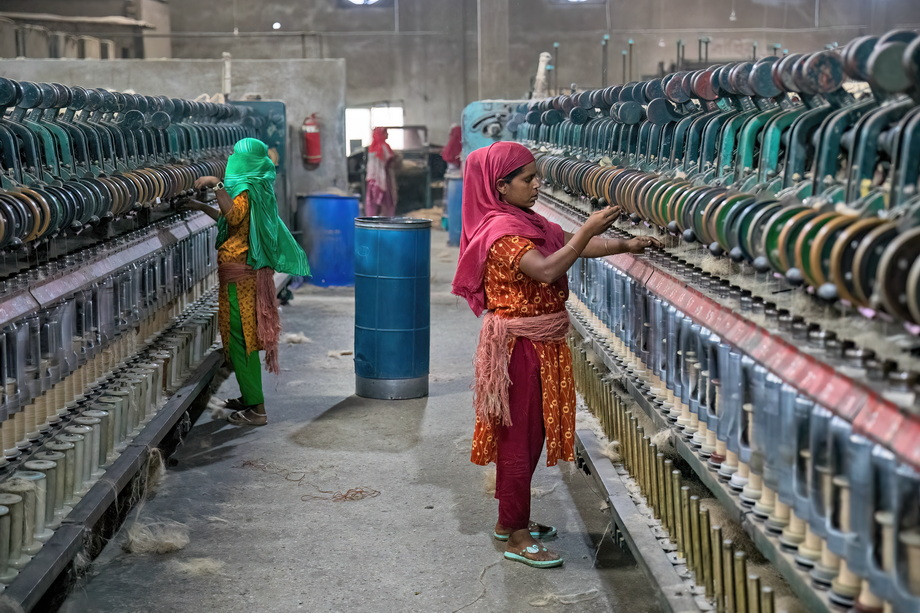
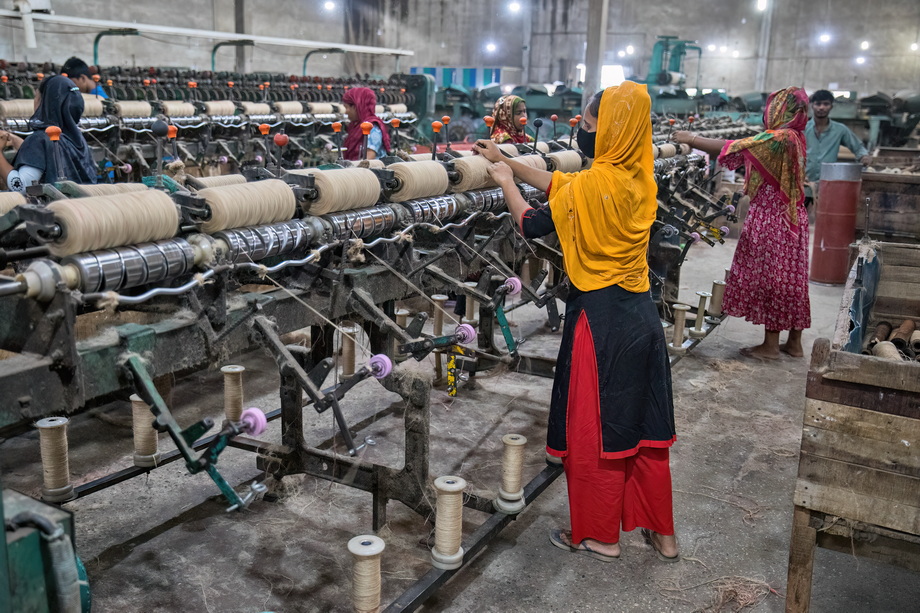
The slivers are drawn out and twisted on spinning frames to produce industrial yarns and twines of varying thicknesses.
The spun yarn is woven into diverse textiles like Hessian cloth (burlap), heavier sacking bags (gunny sacks), carpet backings, or canvas.
Jute harvesting and processing in Bangladesh

Jute harvesting and processing in Bangladesh

Jute harvesting and processing in Bangladesh

Jute harvesting and processing in Bangladesh

Jute harvesting and processing in Bangladesh

Jute harvesting and processing in Bangladesh

Jute harvesting and processing in Bangladesh

Jute harvesting and processing in Bangladesh

Jute harvesting and processing in Bangladesh

Jute harvesting and processing in Bangladesh

Jute harvesting and processing in Bangladesh

Jute harvesting and processing in Bangladesh

Jute harvesting and processing in Bangladesh

Jute harvesting and processing in Bangladesh

Jute harvesting and processing in Bangladesh

Jute harvesting and processing in Bangladesh

Jute harvesting and processing in Bangladesh

Jute harvesting and processing in Bangladesh

Jute harvesting and processing in Bangladesh

Jute harvesting and processing in Bangladesh

Jute harvesting and processing in Bangladesh

Jute harvesting and processing in Bangladesh

Jute harvesting and processing in Bangladesh

Jute harvesting and processing in Bangladesh

Jute harvesting and processing in Bangladesh

Jute harvesting and processing in Bangladesh

Jute harvesting and processing in Bangladesh

Jute harvesting and processing in Bangladesh

Jute harvesting and processing in Bangladesh

Jute harvesting and processing in Bangladesh

Jute harvesting and processing in Bangladesh

Jute harvesting and processing in Bangladesh

Jute harvesting and processing in Bangladesh

Jute harvesting and processing in Bangladesh

Jute harvesting and processing in Bangladesh

Jute harvesting and processing in Bangladesh

Jute harvesting and processing in Bangladesh

Jute harvesting and processing in Bangladesh

Jute harvesting and processing in Bangladesh

Jute harvesting and processing in Bangladesh

Jute harvesting and processing in Bangladesh

Jute harvesting and processing in Bangladesh

Jute harvesting and processing in Bangladesh

Jute harvesting and processing in Bangladesh

Jute harvesting and processing in Bangladesh

Jute harvesting and processing in Bangladesh

Jute harvesting and processing in Bangladesh

Jute harvesting and processing in Bangladesh

Jute harvesting and processing in Bangladesh

Jute harvesting and processing in Bangladesh

Jute harvesting and processing in Bangladesh

Jute harvesting and processing in Bangladesh

Jute harvesting and processing in Bangladesh

Jute harvesting and processing in Bangladesh

Jute harvesting and processing in Bangladesh

Jute harvesting and processing in Bangladesh

Jute harvesting and processing in Bangladesh

Jute harvesting and processing in Bangladesh

Jute harvesting and processing in Bangladesh

Jute harvesting and processing in Bangladesh

Jute harvesting and processing in Bangladesh

Jute harvesting and processing in Bangladesh

Jute harvesting and processing in Bangladesh

Jute harvesting and processing in Bangladesh


Photo Gallery: © Holger Hoffmann & Jordi Zaragozà Anglès / Bangladesh - 2026